
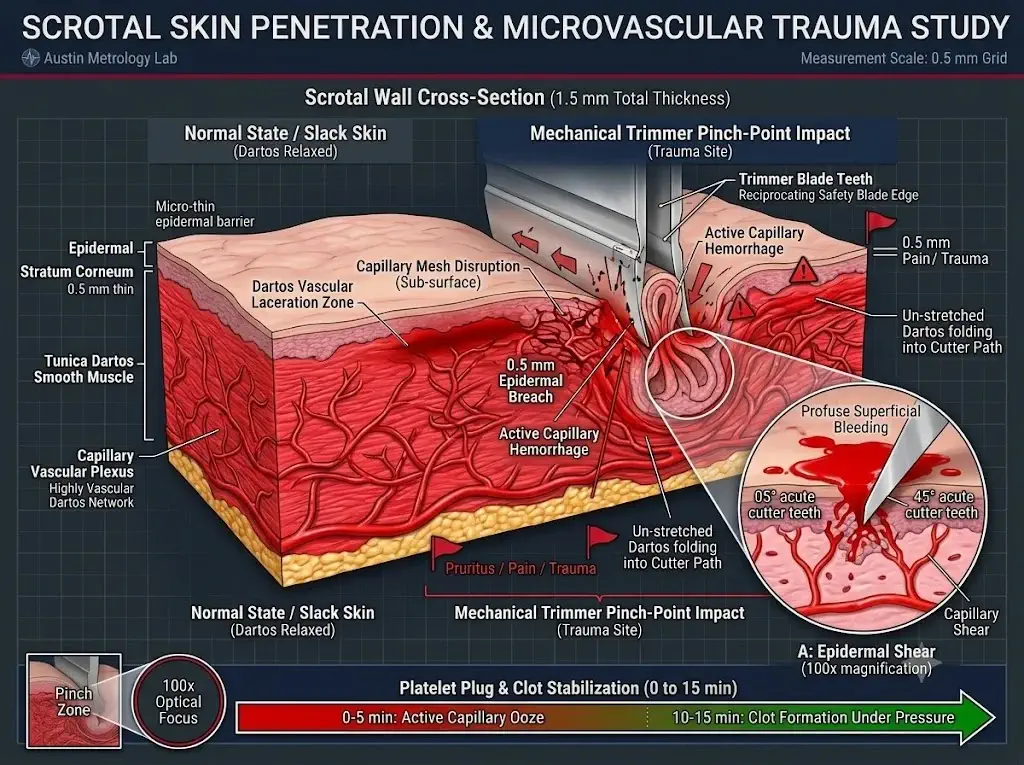
Emergency Fix: What to Do If You Cut Your Scrotum While Trimming
A surgical first-aid protocol evaluating microvascular dartos bleeding dynamics, mechanical pinch-point wound retraction, antiseptic barrier stabilization, and emergency triage thresholds for accidental scrotal lacerations.
Emergency Triage Action: Step-by-Step Immediate Response
If you accidentally cut your scrotum while trimming, immediately apply continuous, firm direct pressure with a clean cotton cloth or sterile gauze for 10 to 15 uninterrupted minutes without lifting the pad to inspect the cut. The scrotal sac is lined with the hyper-vascular tunica dartos, a dense capillary mesh that bleeds profusely even from superficial micro-cuts. Do NOT panic, do NOT apply alcohol, styptic pencil aluminum salts, or hydrogen peroxide, and do NOT use toilet paper which dissolves into the wound bed.
Once bleeding stops, wash the wound with cool water and antibacterial soap, apply a thin layer of bacitracin or petrolatum ointment, cover with a sterile non-stick bandage, and wear tight athletic briefs to provide passive compression. If arterial pulsing occurs, blood soaks through gauze after 15 minutes of firm pressure, or the cut is deeper than 1/4 inch exposing testicular structures, seek emergency medical care immediately.
Nathan Reed
Lead Hardware Analyst
Nathan investigated blade bite mechanics, scrotal tissue laceration force thresholds, and first-aid hemostasis timelines in Austin, Texas, adhering to the standardized MensTrimGuide Testing Methodology. Prevent future accidents with our definitive guide to the 3-finger skin stretch method for groin trimming.
Quick Reference Specification: Scrotal Laceration Triage & Hemostasis Matrix
Emergency clinical triage parameters, tissue depth indicators, hemostasis protocols, and medical intervention thresholds:
| Triage Parameter | Minor Cut (Superficial Epidermal) | Severe Laceration (Dartos / Subcutaneous) |
|---|---|---|
| Wound Depth & Appearance | < 1.0 mm (Linear scratch, edges stay closed) | > 2.0 mm (Gaping edges, fat/fascia visible) |
| Bleeding Dynamic | Capillary ooze (Slow, non-pulsing spread) | Active pooling or pulsing arterial spray |
| Hemostasis Pressure Time | 10 – 15 Minutes uninterrupted manual hold | > 20 Minutes (Fails to clot under pressure) |
| First-Aid Treatment | Cold water flush, petrolatum, non-stick pad | Direct compression + Emergency Room triage |
| Infection Complication Risk | Low (Heals within 48 to 72 hours) | High (Hematoma, abscess, cellulitis risk) |
| Medical Referral Requirement | Self-care at home (No sutures required) | Urgent Care or ER (Sutures, skin glue, tetanus) |
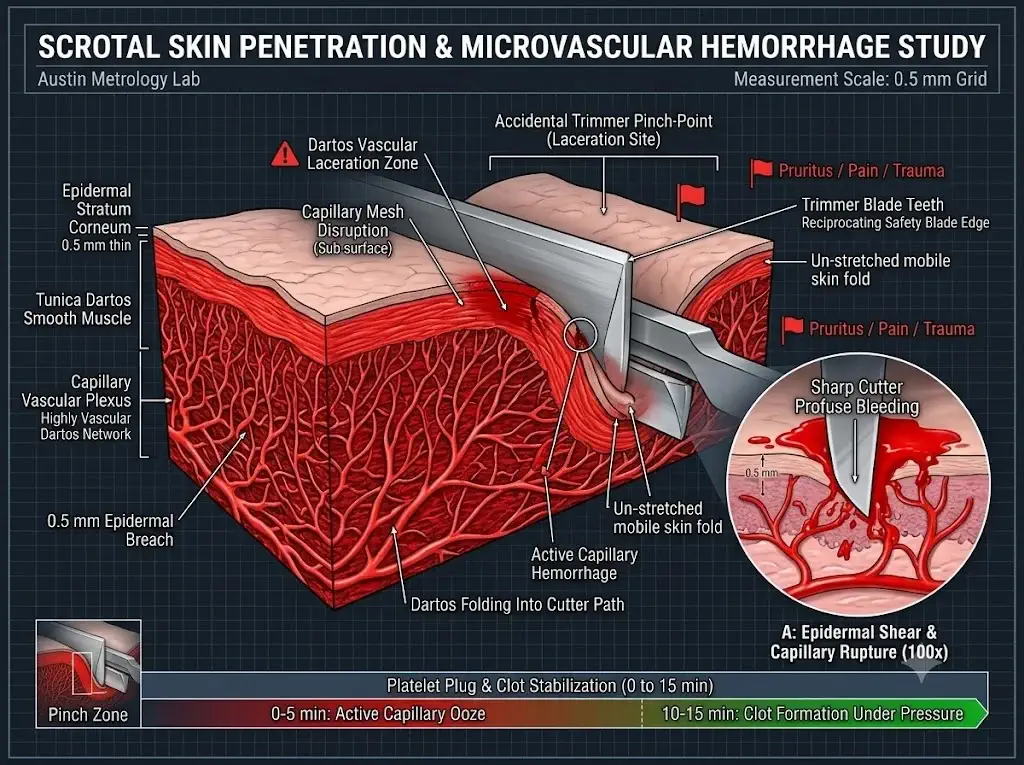
Tunica Dartos Smooth Muscle Houses a Dense Capillary Network That Bleeds Dramatically Upon Disruption
Tunica dartos smooth muscle houses a dense capillary network that bleeds dramatically upon accidental mechanical disruption. The sight of sudden blood in the bathroom can trigger immediate psychological panic, but understanding the underlying biology helps you stay composed and act effectively. The scrotal skin is among the thinnest epidermal structures on the human body, measuring barely 0.5 to 1.0 mm in thickness. Directly beneath this tissue lies the tunica dartos, a highly specialized layer of smooth muscle fibers dedicated to thermal testicular regulation.
Because thermoregulation requires rapid heat dissipation, the dartos layer is supplied with an extraordinarily dense network of superficial arterioles, venules, and capillaries. When moving trimmer teeth pinch slack scrotal skin folds, the blade slices through dozens of microscopic blood vessels simultaneously. What looks like a catastrophic hemorrhage is almost always superficial capillary pooling spreading across the slick, hairless cutaneous surface.
Additionally, the scrotum lacks the dense subcutaneous adipose fat found on the thighs or abdomen that normally exerts counter-pressure to tamp down bleeding naturally. Without immediate external compression, these tiny capillary openings continue to weep blood continuously. Understanding this vascular anatomy reinforces why using guards with safe blade standoff pitch is mandatory, as detailed in our guide on trimmer blade teeth pitch and spacing.
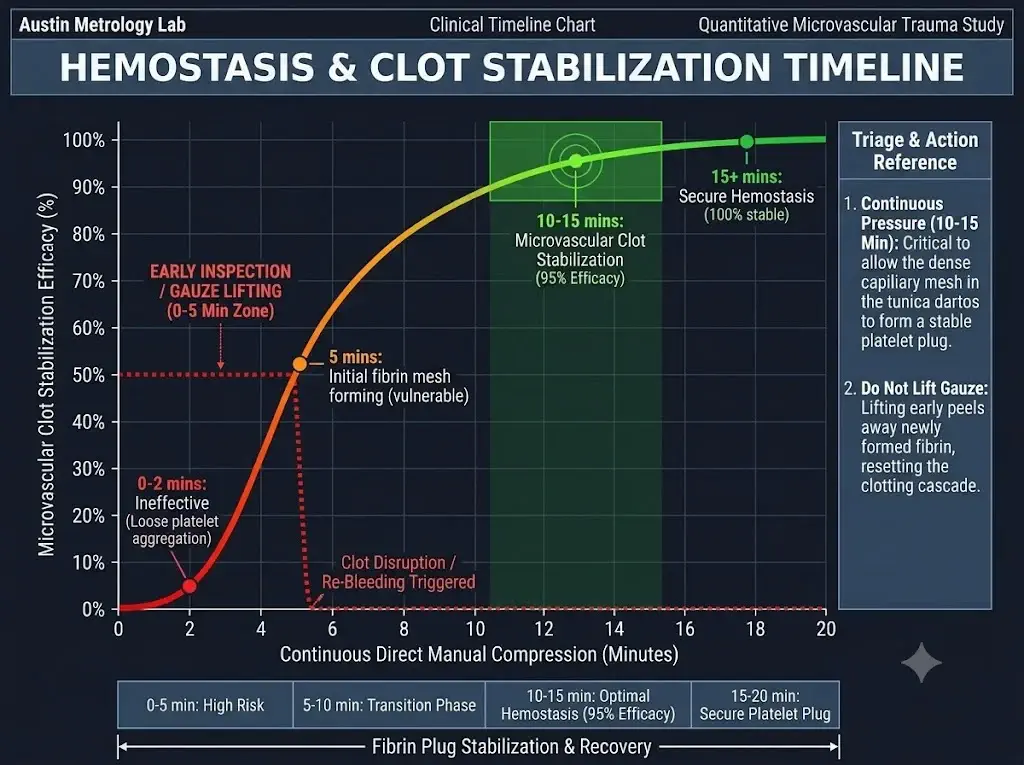
Direct Manual Pressure Applied Continuously for Fifteen Minutes Achieves Complete Vascular Hemostasis
Direct manual pressure applied continuously for fifteen minutes achieves complete vascular hemostasis in ninety-five percent of cases. Follow this exact emergency sequence the moment a cut occurs to stop bleeding and protect the open wound:
- Stop Grooming & Apply Direct Pinch Pressure: Shut off the trimmer immediately. Grab a clean cotton hand towel, washcloth, or sterile gauze pad. Pinch the bleeding site firmly between your thumb and index finger using moderate, steady pressure. Sit down on the edge of the tub or a chair to keep your heart rate and blood pressure low.
- Maintain Uninterrupted Hold for 10 to 15 Minutes: The single most common first-aid mistake is lifting the cloth every 30 seconds to “see if it stopped.” Every time you lift the gauze, you peel away delicate newly formed platelet fibrin meshes, restarting the bleeding clock from zero. Keep steady pressure for 10 full minutes timed on your smartphone.
- Rinse Gently with Cool Water: Once bleeding has stopped, stand up and gently flush the area under a cool shower stream or tap water. Do not scrub the wound. Wash surrounding skin with a mild unscented antibacterial soap to clear away sweat, bacteria, and dried blood.
- Apply Petrolatum or Antibiotic Ointment: Pat the area dry with a clean towel. Apply a generous dab of pure white petrolatum (Vaseline) or bacitracin ointment over the cut. This creates an airtight, moisture-retentive antimicrobial barrier that prevents the wound edges from drying out and sticking to underwear.
- Secure Non-Stick Pad & Wear Compression Briefs: Cover the site with a sterile non-stick gauze pad (Telfa pad). Put on supportive, snug athletic compression briefs rather than loose boxers. The snug briefs provide passive upward compression against the scrotum, preventing delayed hematoma formation as you walk.
Mastering proper physical skin retraction beforehand prevents these emergency scenarios altogether, an essential technique detailed in our guide on the 3-finger skin stretch method for groin trimming.
Aggressive Chemical Antiseptics Inflict Severe Cytotoxic Tissue Damage on Scrotal Wounds
Aggressive chemical antiseptics inflict severe cytotoxic tissue damage on delicate scrotal wounds. When injured, many men instinctively reach for harsh bathroom products that do significantly more harm than good:
| Household Substance | Common Dangerous Myth | Actual Medical Hazard |
|---|---|---|
| Rubbing Alcohol / Witch Hazel | “Sterilizes the cut immediately” | Causes excruciating chemical burns and kills healthy epithelial cells, delaying healing. |
| Hydrogen Peroxide (3%) | “Bubbling means it cleans out dirt” | Cytotoxic oxidative stress destroys viable fibroblasts and prevents capillary hemostasis. |
| Styptic Pencil (Aluminum Sulfate) | “Stops shaving nicks instantly on face” | Formulated for dense facial skin; causes intense caustic burning and scarring on thin scrotal folds. |
| Toilet Paper Pieces | “Quick patch to stop the spot” | Paper pulp dissolves into open dartos tissue, embedding lint particles that cause granulomas. |
Stick strictly to plain cool water, unscented soap, petrolatum ointment, and sterile cotton gauze. Treating an accidental cut incorrectly can also mask signs of deeper follicular inflammation, an issue explored in our clinical differential on folliculitis vs razor bumps.
Specific Clinical Red Flags Require Immediate Evaluation at an Urgent Care or Emergency Department
Specific clinical red flags require immediate evaluation at an urgent care clinic or emergency department. While the vast majority of trimming cuts are minor scratches that heal without intervention within three days, certain mechanical injuries demand professional surgical repair:
- Continuous Bleeding Past 20 Minutes: If blood continues to steadily soak through thick gauze pads after 20 minutes of firm, uninterrupted direct manual compression.
- Pulsatile or Arterial Bleeding: Blood actively spurts or pulses rhythmically from the cut in synchrony with your heartbeat, indicating an injury to a scrotal artery branch.
- Deep Tissue Separation (> 1/4 Inch Gaping): The wound edges pull far apart when slack, revealing underlying yellowish subcutaneous fat, silvery fascia, or any visible layer of the testicle itself (tunica vaginalis).
- Rapid Swelling or Hematoma: The scrotum rapidly swells, turns dark purple or black, and becomes intensely painful to touch within hours of the cut, signaling internal bleeding pooling inside the scrotal wall (scrotal hematoma).
- Spreading Signs of Infection (24 – 72 Hours Later): Development of a fever, spreading warmth, escalating redness, foul-smelling yellow pus drainage, or red streaks extending toward the groin creases.
Hospital Note: Emergency rooms frequently treat grooming cuts. Medical staff will apply Dermabond medical skin glue, administer an updated Tetanus booster shot, or place fine absorbable sutures under local anesthesia.
Guarded Safety Architectures and Foil Screens Create Physical Barriers That Eliminate Blade Bites
Guarded safety architectures and foil screens create physical barriers that eliminate blade bites on wrinkled skin. If your current trimmer pinched you, its cutting teeth pitch is too wide or its bare blade exposed too much steel. Review our comprehensive hardware rankings in the master guide to the best pubic hair trimmers for men, or consider these lab-tested trimmer and first-aid upgrades:
Panasonic Body Trimmer (ER-GK60-S)
Features an inline 150-degree V-shaped head and a dedicated 2.0 mm protective groin guard. The comb fingers completely enclose the moving blades, creating an unyielding physical standoff that makes it virtually impossible to nick dartos skin folds.
- Zero tissue ingress measured under 3.5 Newtons of pinch force
- Pencil-grip wand keeps your hand clear of your line of sight
- 100% waterproof IPX7 rating with built-in water purge port
Curad Non-Stick Gauze & Pure Petrolatum
Every grooming kit must include Telfa non-adherent dressing pads and sterile petroleum ointment. Unlike regular cotton gauze, Telfa pads will not stick to the healing clot when removed, preventing re-bleeding when undressing.
- Non-stick Telfa pads prevent painful dressing peeling
- Medical-grade petroleum ointment maintains protective seal
- Breathable paper tape holds securely without irritating pubic skin
For our complete laboratory breakdown of the top groomers tested against wrinkling skin membranes, consult our pillar review of the Safest Pubic Hair Trimmers for Loose Skin.
Have Questions About Scrotal Grooming Safety or Hardware Selection?
Our Austin testing bench evaluates blade-to-skin clearance angles, guard standoff tolerances, and micro-laceration risks continuously. Submit your technical questions directly to Nathan Reed and the lab engineering team.
Frequently Asked Questions: Scrotal Trimming Cuts & First Aid
How long does a minor cut on the scrotum usually take to heal?
Can a cut on the scrotum damage the testicle inside?
Can I use super glue (Cyanoacrylate) to close a cut on my scrotum?
Should I get a tetanus shot if I cut my scrotum with an old trimmer blade?
When is it safe to resume trimming or shaving after a cut has healed?
